

Scholarship Awards (Academic Year 2026-27)

Theda Rehbock Philosophy Residency 2026 Scholarship Awards
We are thrilled to announce the recipients of the prestigious Theda Rehbock Philosophy Residency 2026/27 scholarships.
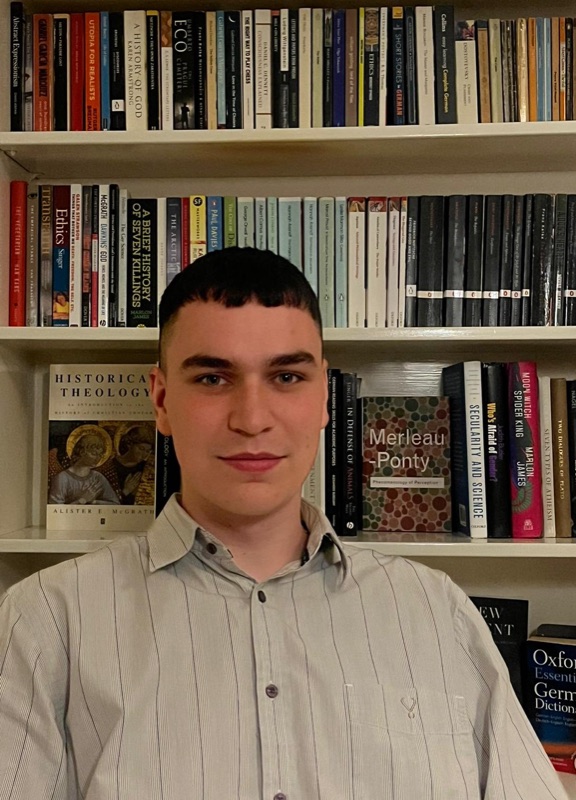
Kieran Evans
M4C Doctoral Student, University of Nottingham
Project: The Flesh of Life: Unearthing a Chiasmic Ontology for Biology
Recent biological developments have shifted the framework away from stability, preferring change. Kieran’s project renders the logic underlying this new paradigm explicit, laying out the resulting consequences: a paradigmatic shift, eschewing ontological reductionism, whilst reforming concepts of ‘emergence’. To frame this, his project approaches the data through Merleau-Ponty’s ontology, exposing the inherent constitutive entwinement of the body and world as “communion.” The project’s transdisciplinary method offers a radical reinterpretation of the ancient and contemporary question: what is life? By refocussing on the inescapability of embodiment, whilst eschewing the typical philosophy of science body-world distinction, an ontology of life as experienced is forged – as flesh.
Residency Period: January 31 – February 21, 2027
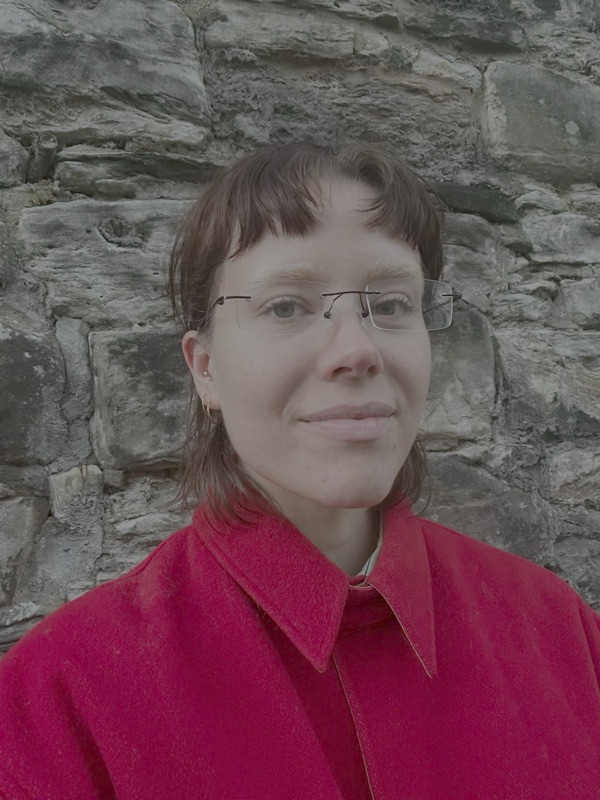
Claire Jansen-Faught
PhD student in Philosophy, University of Edinburgh
Project: “Affective Failure: What Do We Owe to the Bereaved?”
My project seeks to prove that grieving people experience bereavement-specific wrongs which the concept of “affective injustice” is not equipped to accurately or fulsomely capture. It strikes me that grief’s emotional richness makes it an obvious and important test case for affective injustice, but if, as I suspect, we cannot locate affective injustice in grief, it is (at least as it has been conceptualized so far) a flawed concept. I will argue that while we do have a moral responsibility to attend properly to the grief of others, failing to properly exercise this sort of responsibility is just that: a moral failure, not an affective injustice. I want to replace affective injustice’s present scope with an accurate one, and to arrive at a moral framework that describes the demands we can justifiably place on individuals and institutions who are in a position to have an effect on people’s grief experiences. Given the number of state-sponsored deaths currently happening across the globe, it is vital that we pay special attention to grievers and to the expectations that can and should be assigned to the rest of us.
Residency Period: January 31 – February 21, 2027

Ass.-Prof. Dr. Tabea Ott
Assistant Professor of Medical Ethics and Diaconal Sciences, Faculty of Protestant Theology, University of Vienna; Deputy Head, Institute of Ethics and Law in Medicine, University of Vienna and Medical University of Vienna
Project: Ethics of Memory: A Critical Analysis of the Ethical and Normative Implications of Remembrance
During my stay at Susimetsa, I will be working on my second book, which critically examines philosophical and theological approaches to an ethics of memory. While memory has been extensively studied as a historical, cultural, and political phenomenon, my project approaches remembrance from a normative and metaethical perspective. What does it mean to claim that individuals, institutions, or societies ought to remember? What distinguishes ethically significant acts of remembrance from the mere preservation or retrieval of information? And to what extent can memories of past experiences of injustice, suffering, and vulnerability, but also of resistance, emancipation, and liberation, contribute to the justification of ethical principles?
Residency Period: January 31 – February 21, 2027
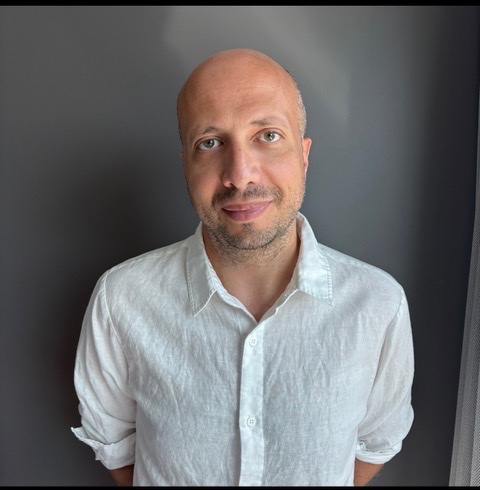
Luca Jean Pitteloud
Professor of Philosophy, Universidad de Valladolid
Project: Measure, Persuasion, and Harmony: Therapeutic Rationality in Plato’s Timaeus and Contemporary Health Ethics
Plato’s Timaeus contains one of antiquity’s first systematic philosophies of health. It conceives health as proportion and measure (symmetria), disease as a local breakdown of ratio in the motions and mixtures of body and soul, and medicine, gymnastics and music as the restoration of a disturbed order – a “persuasion” of the body toward measure rather than its coercion. Grounded in the analogy between the living body and the cosmos, this therapeutic rationality gives a central role to measured motion, rhythm and music as instruments of health (Timaeus 88e–89a; Laws VII 790c–791b). The project reconstructs it in detail and asks what this integral, non-reductive conception – in which human wellbeing is inseparable from the balance of a larger whole – can offer contemporary health ethics, in dialogue with frameworks such as One Health and Planetary Health. It forms part of the Spanish research project “Between Kosmos and Oikos: Reconstructing the Ecological Paradigm from Plato’s Timaeus” (PID2025-171298NB-I00, Agencia Estatal de Investigación).
Residency Period: February 28 – March 20, 2027
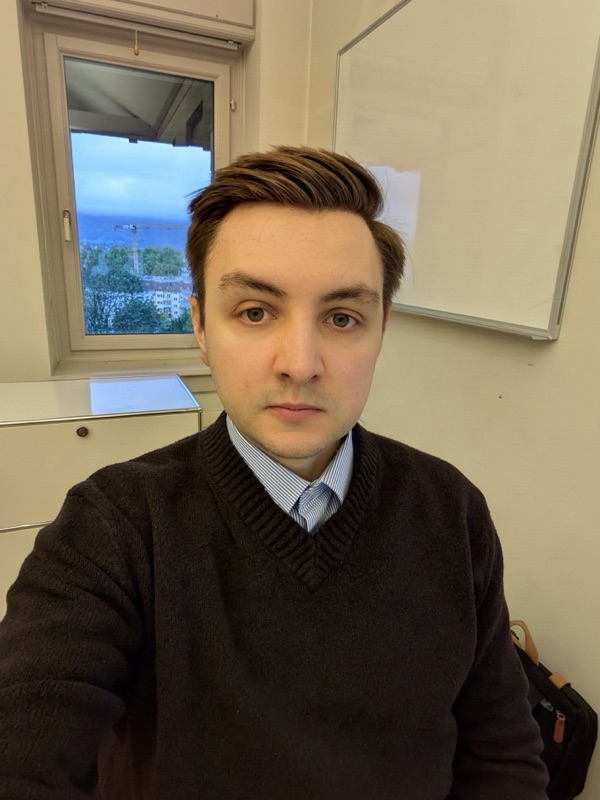
Dr. Nikolai Shurakov
Postdoc at the University of Zürich
Project: Experimental Philosophy of Deception in Patient–Doctor Communication
When a doctor says nothing false but leaves a patient with a false belief, has the patient been deceived? Bioethics and medical ethics have debated for decades under which circumstances physicians may deceive patients. These fields rarely deal with the question of which communicative acts constitute deception. Philosophy of language, in turn, offers a wide range of candidates for deceptive communication: lying, (being) misleading, framing, omission, manipulation, etc. Recently, experimental philosophy employed novel methods for testing how lay people classify such phenomena. Significant progress has been made in identifying factors that affect the folk concept of lying. My project brings these fields together: it is a project in experimental philosophy that also has implications for bioethics. I would like to investigate whether lay people (who in a medical context become patients) are sensitive to the distinctions already discussed in bioethics and philosophy of language (for example, do they differentiate being misleading from using framing). Furthermore, I would like to connect the debates with research on trust. Medical professionals are often among the most trusted occupations; however, deception is one of the ways trust is lost. Such lost trust can be harmful as people who lose trust in doctors are more likely to avoid doctors or postpone appointments. The project will evaluate whether different means of deception differ in the extent to which they erode trust.
Residency Period: March 1 – March 14, 2027
Lara Maassen
Residency Period: February 28 – March 20, 2027
Ruth Chadwick
Residency Period: February 28 – March 20, 2027
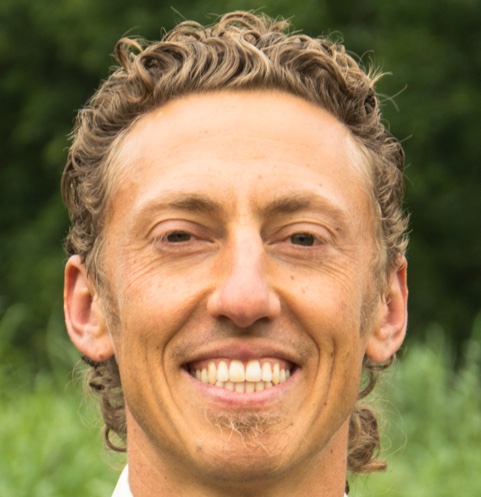
Yogi Hale Hendlin
Assistant Professor (tenured), Erasmus School of Philosophy, and Core Faculty, Dynamics of Inclusive Prosperity Initiative, Erasmus University Rotterdam
Project: The Eudaimonia of Signs: Biosemiotics, Emotion, and the Good Life
My forthcoming Semiocide (Cambridge University Press, Elements in Environmental Humanities, 2027) examines the destruction of the meaningful relations through which organisms and communities inhabit their worlds. The Eudaimonia of Signs asks the converse question: what does it mean for semiosis to go well? The Eudaimonia of Signs does not ascribe happiness to signs, but rather designates the conditions under which living processes of interpretation contribute to fractal flourishing, from organism to ecological community. The book begins from ‘semiotic truncation’, the gap between the dense relational field every organism inhabits and the few prominences that cross its perceptual thresholds, and the error, in Uexküll’s terms, of mistaking the Umwelt for the Umgebung. Reading Theda Rehbock’s work on Goethe’s rescue of the phenomena alongside Peirce and contemporary biosemiotics, I develop a theory of emotions as relational forms of bodily valuation, tracing through Peirce’s interpretants how feeling settles into habit. A culture can saturate itself with salient signs while growing poor in the relations needed to interpret them. Flourishing then becomes partly a matter of semiotic depth. The project carries biosemiotics from description toward philosophy as a way of life, asking which practices thicken rather than truncate our capacity for meaningful relation.
Residency Period: April 4 – April 25, 2027
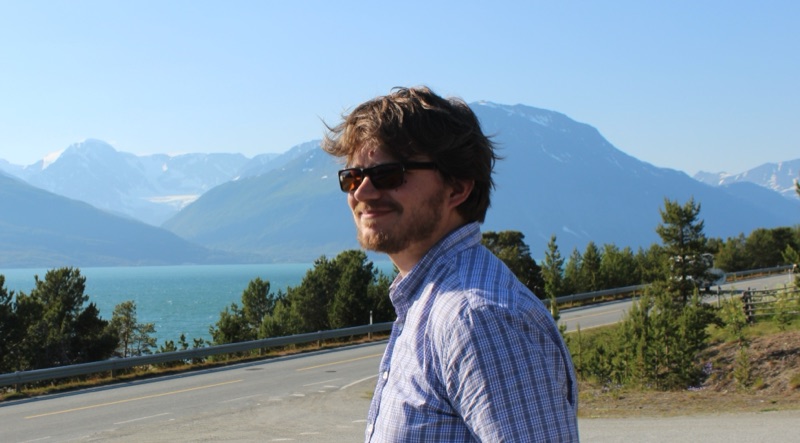
Eero Kaila
Independent scholar, DSocSci
Project: From Principles to Practice: Moral Responsibility meets Research Integrity
During the residency, I aim to prepare an outline for a project exploring the connection between philosophical accounts of moral responsibility and contemporary practice of research integrity. Drawing particularly on the work of Aristotle and P. F. Strawson, the project will examine what it means to be held responsible in the context of research, how moral responsibility of researchers is shaped by judgement and/or character, and how expectations within research communities influence their conduct. It also considers how philosophical perspectives can help us better understand the principles that guide research integrity, from everyday decision-making and professional development to the assessment of misconduct. By connecting philosophical theory with practical experience in research integrity, the project seeks to clarify our understanding of what responsibility means for researchers and in what ways it could be fostered in practice.
Residency Period: April 4 – April 25, 2027
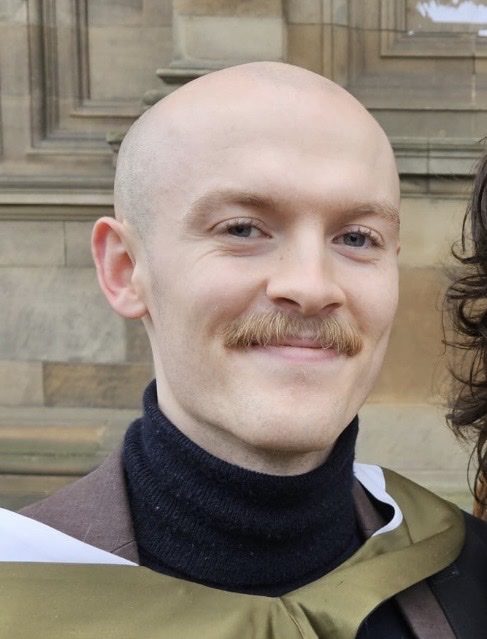
Harry Vincent
PhD Candidate in Philosophy at the Arché Philosophical Research Centre, University of St Andrews
Project: Pragmatic Foundations for Substructural Logics
My thesis aims to develop pragmatic formal and philosophical foundations for substructural logics. In doing so I hope to provide more philosophically satisfying justifications for the use of these logics in various areas of philosophy, and to develop more complete readings of key neopragmatist inspirations (Hegel and Wittgenstein) by accounting for some of their more perplexing comments on paradox and contradiction.
During my residency at Susimetsa I will be working on completing two papers which approach this aim from two directions. The first argues that many difficulties associated with paraconsistent approaches to the semantic paradoxes can be avoided or explained from an inferentialist and pragmatic-focused perspective, as opposed to the standard representationalist and semantic-focused view. The second argues that the primitive discursive practices appealed to in Robert Brandom’s pragmatics ought to be supplemented with abductive, chunked and public reasoning behaviours, and that the logics which express the resulting structure are non-classical.
Residency Period: April 4 – April 25, 2027
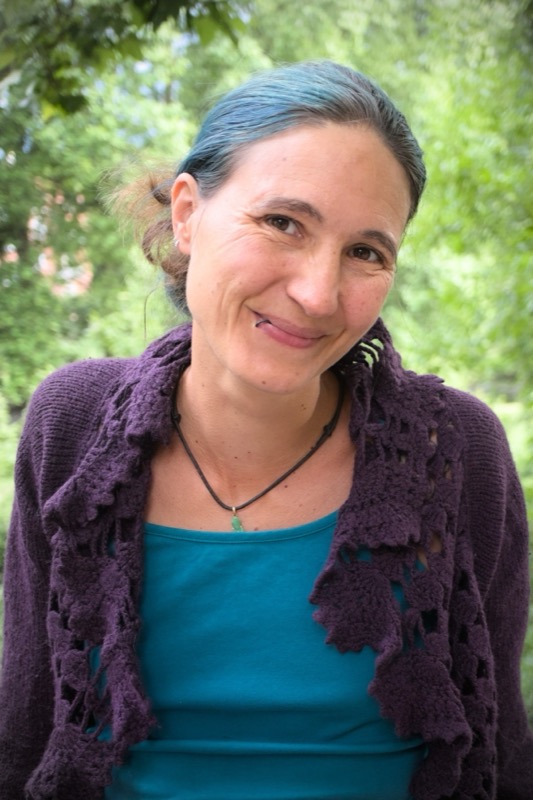
Vanessa Weihgold
Research associate at the International Centre for Ethics at the Centre for Ethics in the Sciences and Humanities, University of Tübingen
Vanessa’s PhD project at Tübingen University addressed the question of whether ecological emotions show a cultural conflict. Vanessa studied Philosophy in her Master’s and Philosophy, Romance Studies and Economic Psychology in her Bachelor’s. Since July 2019 she has been employed at the IZEW, worked for the LeNa Shape project from December 2022 through March 2024, then supported the Chair of Bioethics, and since October 2025 has worked in the KuNaH and KuNaH-T projects, as well as CLASS.
Research project: Finalizing my research proposal on “The Relationality of Traditional Ecological Knowledge: Epistemic Injustice and the Loss of Nature Connectedness in Europe.”
My proposal is about investigating the hypothesis that Western societies’ struggle to adopt sustainable behaviors stems from a lack of relationality and nature connectedness—a gap that persists despite scientific warnings about climate change. While Indigenous philosophies (e.g., Buen Vivir) and psychological research (Barragan-Jason et al., 2022; Lengieza & Swim, 2021) emphasize the transformative power of seeing oneself as part of nature, European contexts might not contradict that generally but often dismiss emotional and relational engagement with nature as romantic or non-scientific. This project asks:
- Is there epistemic injustice against traditional European ecological knowledge (TEK)?
- How does the loss of TEK transmission (e.g., intergenerational farming practices in Europe) hinder nature connectedness?
- Can revitalizing TEK help bridge the gap between knowledge and sustainable action?
Residency Period: April 4 – April 20, 2027